Let’s start by addressing a reality most of us in the home service industry know all too well. We often see teams operating with a disorganized pile of inquiries instead of a true system. Building a Sales Pipeline for Your Contractor Business: From Lead to Close requires abandoning that chaos immediately.
Our team notices that while some prospects get a rapid response, others wait days or simply vanish. Leads flood in from Google searches, past client referrals, and local yard signs.
We know that chaotic pile is costing you real money every single month. A structured digital board fixes the chaos by offering three distinct benefits:
- Total visibility into every active prospect.
- Accountability for every follow-up task.
- The ability to forecast revenue weeks in advance.
Our goal today is to break down the exact seven stages you need to track to fix this. Let’s explore the metrics that matter most and how to choose the right software to manage it all.
What a Sales Pipeline Actually Is
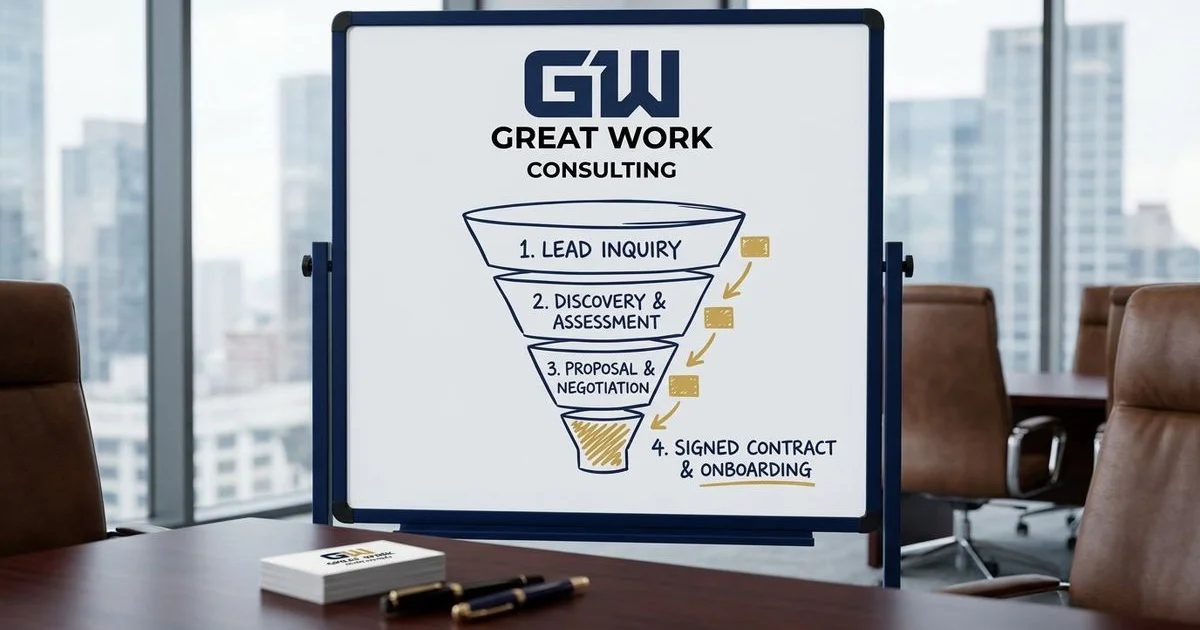
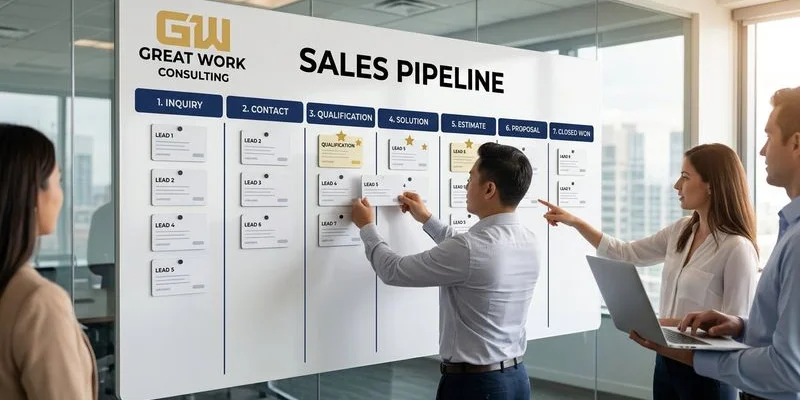
We define a sales pipeline as a visual representation of every active prospect and their current status in your buying process. A good system acts as a series of specific steps that a potential customer moves through from their first call to a signed contract. Our experts ensure each stage requires clear entry criteria, defined actions, and expected timelines. Recent 2025 research shows that 87% of modern customer relationship management tools now operate entirely in the cloud, making these visual boards accessible from any job site.
We use this framework to replace the chaos of scattered truck notes and memory-based follow-ups. Anyone on your staff can log in and immediately understand the status of a potential $50,000 patio build. Our primary goal remains straightforward and highly actionable. These systems ensure you know exactly where every dollar of potential revenue sits today. We guarantee you will instantly see what specific action moves that revenue forward tomorrow.
The Seven-Stage Contractor Sales Pipeline
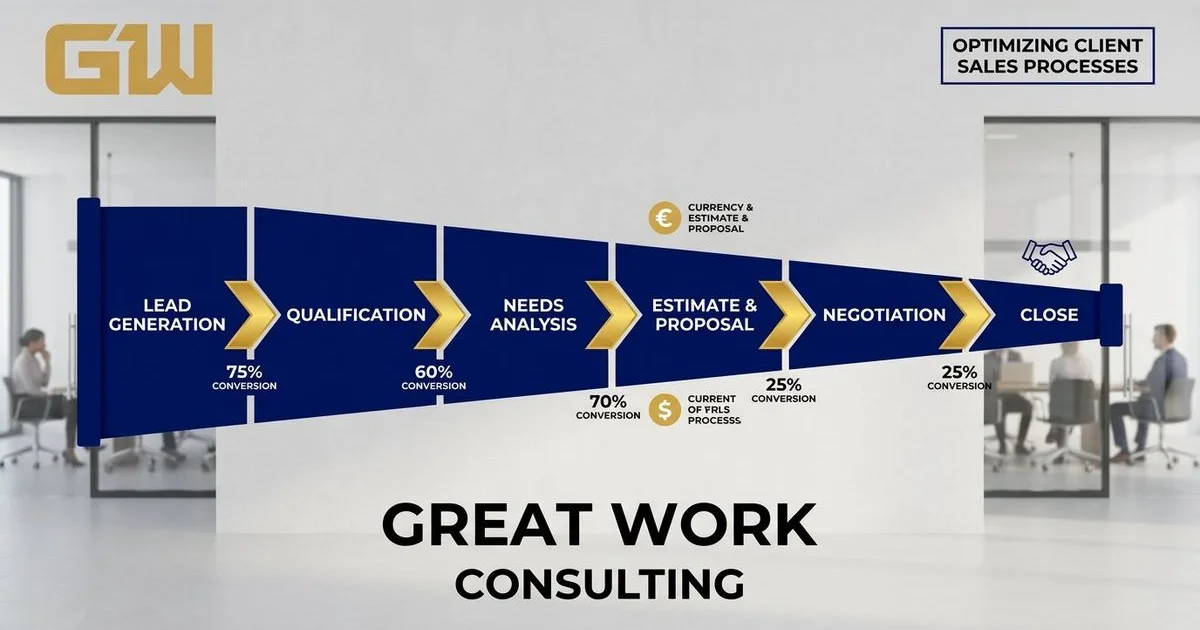
A specific structure works beautifully across hardscape, landscaping, and outdoor construction businesses. We have refined this seven-step framework to create predictability and prevent high-value projects from slipping away. Real-world application of this exact blueprint helps clients organize their daily operations.
Stage 1: New Lead
We log a prospect into the system the moment they make contact via a web form, phone call, or social media message. Every inquiry must be captured immediately with contact information, project type, and the date received. Our teams view speed as the single most critical metric in this initial phase. An analysis of 2025 U.S. industry data highlights why rapid replies are non-negotiable:
- The First Responder Advantage: 78% of customers buy from the very first company to reach out.
- The 42-Minute Gap: Industry surveys suggest the average home service contractor takes 42 minutes to reply, leaving a massive opening for competitors.
- The Five-Minute Rule: A landmark MIT study found that responding within five minutes makes you 100 times more likely to connect compared to waiting thirty minutes.
We tell our clients to set up instant text alerts to ensure their team always wins that race. An automated SMS acknowledgment can buy you the time needed to make a personal phone call.
Stage 2: Qualified
We use the qualification stage to confirm the prospect has a realistic budget, decision-making authority, and a clear timeline. Not every inquiry translates into a profitable opportunity for your business. Our experience shows that a homeowner asking about a $5,000 fire pit is not a fit if your minimum project size is $25,000. Data from Harvard’s Joint Center for Housing Studies projects the median U.S. home improvement spend for 2025 sits around $15,000.
We recommend using a brief intake phone call or a detailed website form to gather these crucial details. You must protect your time by identifying these mismatches early and politely redirecting unqualified prospects. Our intake forms successfully filter out mismatched projects before they ever reach the sales team.
Stage 3: Site Visit Scheduled
Once a prospect passes the qualification check, you move them here to schedule an on-site consultation. We track scheduling density closely during this phase to prevent scattered appointments that waste drive time. Your calendar management must also account for when people actually reach out. Our research indicates that 62% of U.S. home service inquiries come in outside standard business hours or on weekends.
This means you must have an automated booking link available on your website at all times. We advise tracking how many confirmed appointments actually result in a completed property walk-through.
Stage 4: Estimate in Progress
After the site visit concludes, your design team starts building the formal proposal. We monitor this specific column to see exactly how long estimates take to produce. If files sit here for two weeks, faster competitors will undoubtedly steal your deals. Our consulting team sets a strict target of three to five business days from the property visit to final delivery.
Modern 2025 industry reports from platforms like Building Radar highlight sales cycle efficiency as a top key performance indicator. We use automated reminders to alert the team when a proposal draft is approaching the 48-hour mark.
Stage 5: Estimate Delivered
The formal proposal has finally landed in the homeowner’s inbox. We consider this the most critical phase because it holds your highest concentration of pending revenue. Most contractors simply send the document and wait passively for a reply. Our data shows that 80% of sales require at least five follow-up attempts, yet 44% of sales reps give up after just one try.
The businesses closing at the highest rates utilize a structured touchpoint sequence on key dates:
- Day One
- Day Three
- Day Seven
- Day Fourteen
We highly recommend reading our detailed guide on automated follow-up sequences for contractors to build these exact templates. Recent 2025 statistics reveal that adding text message follow-ups to this sequence generates a 112% higher conversion rate compared to email alone. Our clients always pair a professional email with a quick, friendly SMS check-in.
Stage 6: Negotiation or Revision
Some property owners will inevitably request changes to the proposed materials, scope, or payment terms. We use this column to track active conversations so they never stall out indefinitely. Monitoring your metrics here provides a brilliant reality check on your pricing strategy. Our baseline U.S. benchmark for a healthy home services close rate sits between 25% and 35%.
If your overall closing rate dips below 15%, your sales team likely needs better negotiation training. We frequently tell contractors that if their closing rate exceeds 50%, they are probably charging far too little for their labor.
Stage 7: Won or Lost
The final destination is a definitively closed deal, whether that means a signed contract or a confirmed loss. We believe both outcomes provide immense educational value for your business. Wins immediately feed your production schedule and solidify your cash flow forecasts. Our teams strictly record the reasons behind every lost deal to identify recurring patterns. Understanding if you lost on price, timing, or scope changes helps you refine your marketing messaging for the next quarter.
Pipeline Metrics That Drive Decisions
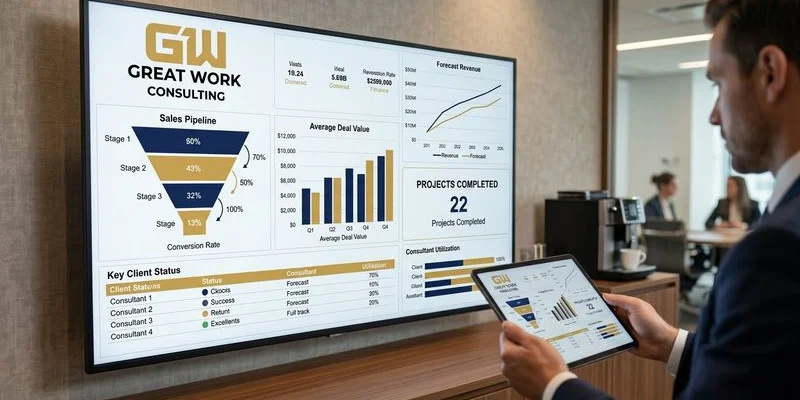
We consider building the initial framework to be only the first step. The real financial value comes from using the system’s data to make smarter business decisions. Our experts suggest reviewing these specific metrics on a weekly basis to transform your operations:
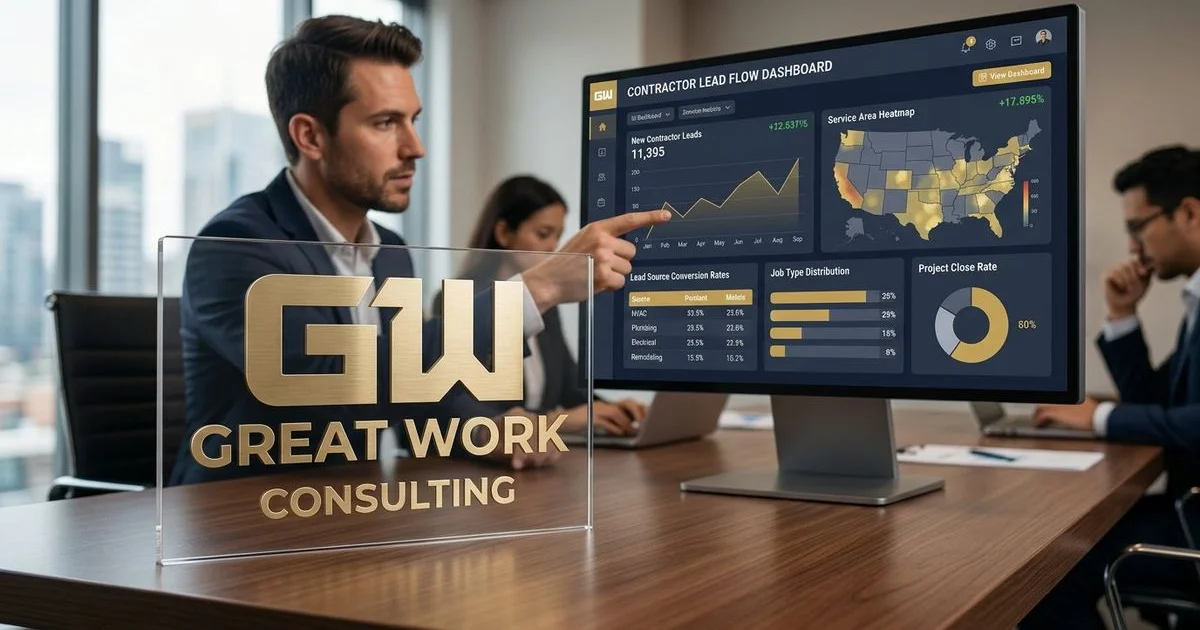
- Lead Volume by Source: Track how many inquiries entered the system this week and exactly where they originated. This data reveals which Google Ads are producing results and which marketing channels are burning cash.
- Stage Conversion Rates: What percentage of site visits actually produce a delivered estimate? Identifying your weakest conversion point tells you exactly where to focus your training efforts.
- Average Deal Value: You must compare your average proposed project size against your average closed project size. A $35,000 average estimate dropping to a $22,000 average close usually means a team is discounting too aggressively.
- Pipeline Velocity: How many days does an average prospect take to move from an initial inquiry to a signed contract? Using this exact timeframe allows you to forecast revenue six to eight weeks out with remarkable accuracy.
- Total Pipeline Value: Multiply the total dollar amount of all outstanding estimates by your historical close rate. Having $500,000 in outstanding proposals with a 25% close rate means you can confidently expect roughly $125,000 in upcoming contracts.
Our financial analysts rely on these exact numbers to guide aggressive growth strategies. Accurate tracking allows you to guide expansion plans with total confidence.
Common Pipeline Mistakes Contractors Make
We know that even the most expensive software will fail if the underlying human processes are flawed. An audit of U.S. construction businesses frequently reveals the exact same recurring operational errors.
Letting Leads Pile Up in One Stage
We consider having thirty people sitting in the “Estimate Delivered” column with no scheduled communication a massive failure. That scenario is just a slightly more organized version of the chaotic pile you started with. Our rule dictates that every single card on your digital board must have a designated next action and a firm due date attached to it. Never let any prospect sit idle without a follow-up task scheduled in the system.
Not Recording Lost Deals
We view deleting the file when a homeowner hires another local builder as a terrible waste of valuable competitive intelligence. Every manager must record exactly why they lost the bid, whether it was due to a slow response or a budget mismatch. Our most successful clients use six months of this loss data to completely overhaul their pricing models and sales scripts. Tracking losses systematically provides the exact data needed to win more jobs in the future.
Ignoring Lead Source Attribution
We require our clients to tag every single entry with its originating marketing source so they never fly blind. You cannot afford to guess whether your paid search clicks convert at a higher rate than your organic referrals. Our dashboards pull this data automatically to ensure marketing dollars never go to waste. Tracking conversion rates by channel allows you to allocate your advertising budget intelligently.
Building a Pipeline Nobody Uses
We constantly remind owners that a digital tracking board only functions if every person touching a project updates it consistently. The most powerful tool in the world becomes entirely useless if your staff treats daily data entry as optional. Our consultants train office managers and field estimators to log their notes before they ever leave the job site. Mandatory tracking rules must be enforced during the initial onboarding phase to build good habits.
Choosing a CRM for Pipeline Management
We strongly suggest finding a permanent, reliable digital home for your tracking system. Spreadsheets work temporarily, but they completely lack automated reminders and scalable communication logging. Our 2025 technology reviews highlight three dominant options for U.S. contractors: GoHighLevel, HubSpot, and Jobber. A dedicated CRM platform gives you clean visual dashboards and advanced reporting tools.
We break down how the top two marketing-focused platforms compare for a growing local business right here:
| Feature Comparison | GoHighLevel (Best for Marketing & Automation) | HubSpot (Best for Enterprise Analytics) |
|---|---|---|
| 2025 Starting Price | $97/month (Flat rate) | $20+/month per hub (Scales rapidly) |
| Contact Limits | Unlimited contacts included | Prices increase significantly as database grows |
| Best Feature | Built-in SMS marketing & funnel builder | Advanced deal tracking & 1,400+ integrations |
| Ideal Contractor | Lead-heavy businesses wanting predictable costs | Large teams needing deep, granular reporting |
Jobber remains an excellent third option for teams strictly focused on end-to-end field workflow, from the initial call to the final invoice. We cover each platform in intricate detail within our CRM software comparison guide. You can also get strategic guidance on building this complete infrastructure on our CRM and marketing automation consulting page.
Start Simple, Then Optimize
We always tell clients that you absolutely do not need a flawless, heavily automated setup on day one. The smartest move is starting with the seven basic columns, entering every prospect, and committing to daily status updates. Our data proves you will generate reliable baseline metrics within just thirty days. Actionable patterns will emerge within ninety days that inform serious hiring and purchasing decisions.
We frequently hear operators wonder how they ever ran their company without this level of clarity after six months. Disciplined sales workflows allow you to close substantially more deals from the exact same number of inquiries. Our optimized systems directly build companies that command much higher valuations when it is time to map out an exit strategy.
Are you ready to start Building a Sales Pipeline for Your Contractor Business: From Lead to Close today? We invite you to Book a Free Operations Audit so our team can map out your stages, identify your biggest conversion gaps, and recommend the perfect CRM platform for your specific needs.